Steady as she goes: global climatic denial guarantees chaotic future

Below is the full, 800-word version of my article, a compressed version of same appears in this morning’s Irish Times, which runs to just 600 words, so a quarter of the original piece fell under the subs’ desk knife. This is my first piece since the paper underwent its recent re-design; I had no idea quite how far-reaching the impact has been in terms of the reduction in content. It’s a challenge to write an analysis piece on a technical subject threading a range of sources together – and keep it to 800 words. Knock another 200 off that again and…well, it’s essentially a different piece entirely. Anyhow, and for the record, here’s what I was trying to say….

————————————————————

A giant tanker ship carrying 150,000 cubic metres of gas left Norway earlier this month for Japan. The vessel, Ob River, is taking a short cut that will trim several thousand kilometres off the trip. Its historic voyage would, just a decade ago would have been inconceivable even in high summer. The Ob River is travelling through the remnants of the once-frozen Arctic ocean – in the depths of winter.

While 17,000 politicians, NGOs and policymakers gather this week in Doha for the 18th annual talking shop of the United Nations Framework Convention on Climate Change (UNFCCC), back in the real world, temperatures are rising, ice is melting relentlessly and the planet is quickly slipping into a new, chaotic climatic era that scientific studies have been warning about for decades.

Three separate major reports this month, from the World Bank, PricewaterhouseCoopers (PwC) and the European Environment Agency all point to the same stark conclusion: the climate crisis is rapidly turning into an planetary emergency that is fast moving beyond humanity’s ability to contain, let alone reverse, it.

“This isn’t about shock tactics, it’s simple maths”, according to Leo Johnson of PwC. “One thing is clear: businesses, governments and communities across the world need to plan for a (dangerously) warming world – not just 2C, but 4C, and, at our current rates, 6C.”

Even at 2C over pre-industrial levels, the world is likely to have stepped into the abyss of irreversible climate disruption. As that approaches 4-6C, “we are passing through the gates of hell” in the words of one senior scientist. The World Bank Report warned that India would lose half its grain crops and Africa a third of its arable land at just 2C global average temperature increase.

Drought and famines will quickly spread into what are today some of the world’s most important food-producing regions – northern China, the US mid-west, much of the Middle East, as well as India and Pakistan are all facing collapse in water supplies within 10-20 years.

PwC calculates that, to have a 50:50 chance of avoiding the 2C climate ‘red line’, annual carbon emissions reductions of 5.1 per cent will have to be achieved, year on year from now until 2050. In reality, emissions are heading in the opposite direction, currently growing at over 2.5 per cent annually. Not since World War Two have global emissions ever actually declined by this level, and even then, it was for five, not 40 years.

“The new data provides further evidence that the door to a 2C trajectory is about to close”, Fatih Birol, chief economist with the International Energy agency said recently. John Steinbruner, lead author of a study for the US Central Intelligence Agency commented: “climate extremes are going to be more frequent we’re also saying it could get a whole lot worse”.

The US military, not renowned for environmental alarmism, is now bracing for the collapse of multiple states, as floods, famine and disease triggers involuntary mass migration across international borders, on a scale that will rapidly overwhelm any capacity to respond. Ironically, publication of this CIA study was delayed by 10 days as Hurricane Sandy shut down the US Federal government last month.

“We’re on track for a 4C warmer world marked by extreme heat-waves, declining global food stocks, loss of ecosystems and biodiversity, and life-threatening sea level rise,” according to the World Bank report entitled ‘Turn Down the Heat’. A 4C rise this century is “a doomsday scenario”, World Bank president, Jim Yong Kim acknowledged glumly.

The UN conference in Doha comes just weeks after the expiry of the 1997 Kyoto Protocol, which has had only marginal impact in curbing global emissions. There is nothing on the table at Doha that will have any material impact on staving off calamity. The host country, Qatar, is the perfect metaphor for the paradox of progress, as it depends for its wealth on vast reserves of climate-destroying fossil fuels. Scientists estimate that 80 per cent of all known fossil fuel reserves (worth some $20 trillion) must remain in the ground if disaster is to be averted.

We now have no choice but to forego the easy wealth that comes from burning this vast carbon store and instead switch on a massive scale to low-carbon sources, such as renewables and nuclear power, as well as drastic improvements in energy efficiency. Like it or not, this also means the effective winding down of consumption-based capitalism and big drops in living standards.

Once we finally grasp that the consequences of ‘business as usual’ are unimaginably grim, political and economic changes that today seem unthinkable may soon be inevitable. The global slave trade went, in a matter of years, from an indispensable pillar of the world economy to being morally repulsive. To have a future, humanity’s relationships with fossil energy may very soon have to undergo a similar transformation.

John Gibbons is an environmental writer and commentator.
He is on Twitter: @think_or_swim

Posted in Global Warming, Irish Focus, Media | 1 Comment

Humanity’s killing spree about to come full circle

With apologies for an uncharacteristic outbreak of navel-gazing, below, my article as it appears in the current issue of ‘Village’ magazine…

My interest in environmentalism is barely 10 years old. For the bulk of my adult life, far meatier concerns occupied me. Breaking into journalism and establishing a publishing business were of infinitely greater concern to me than the state of the rainforests, ozone layer, polar bears or saving the proverbial gay whales. I remember thinking people like Sting, who droned on about these topics, were just out-of-touch elitists who knew nothing about the real world.

In my book, the real world was the world of work, of bills, by-lines and balance sheets. There was room in this world for family and close friends, but little besides. As the years went by and the business prospered, I felt in control, confident. Though unmapped, the future held no great fears.

“If a man will begin with certainties, he shall end in doubts”, wrote philosopher, Francis Bacon, “but if he will be content to begin with doubts, he shall end in certainties”. Sure enough, these certainties came crashing down around a decade ago, around the time of the birth of my first child, when ‘the future’ turned from a vague abstraction into the place my children would one day have to make their way.

Everyone’s epiphany is different. Mine sprung from a chance reading of Something New Under The Sun, a survey of the parlous state of the biosphere in the 20th century by science historian, Prof JR McNeill. Convinced he must be mistaken, I began reading up obsessively on environmental, energy, resource depletion and biodiversity topics, steering clear of the conspiracy theorists and sticking to the peer-reviewed stuff where possible. McNeill, it turns out, was something of an optimist.

Some two dozen books later and, like the character Neo in The Matrix, I finally awoke in a sweat-drenched panic from the vivid dream I had all my life mistaken for reality.

Neo’s nemesis, the relentless Agent Smith explained it thus: “When I tried to classify your species I realized that you’re not actually mammals. Every mammal on this planet instinctively develops a natural equilibrium with the surrounding environment but you humans do not. You move to an area and you multiply and multiply until every natural resource is consumed and the only way you can survive is to spread to another area. There is another organism on this planet that follows the same pattern. Do you know what it is? A virus. Human beings are a disease, a cancer of this planet. You’re a plague and we are the cure”.

Coming to terms, first intellectually but much later, emotionally, with the wrenching truth of being of a species that can and will destroy both itself and much of the rest of the world has been life-changing. Nor are the timescales encouraging. Even though now in my 40s, unfortunately I’m probably young enough to live to see at first hand the death spiral of industrial civilisation triggering the greatest, most irremediable die-off in all of human history. For many, the relentless rolling global financial crisis that flared up in 2008 resembles a series of arrhythmias presaging a final, fatal event.

What goes around, comes around. Humanity has been on a long killing spree since we first exterminated our cousin primates, the Neanderthals. Our ancient ancestors, with only the tiniest fraction of today’s killing power at their disposal, wiped out much of the megafauna of Australia, Europe and the Americas. As our power has grown, so the carnage has intensified and spread to every corner of the planet, and against every species, including our own.

Barring other calamities, humanity’s hegemony will have committed probably 50% of all species alive today to extinction this century – that’s around 10 million species as genetically unique, even as important, as the genus homo sapiens, driven off the Earth to feed the insatiable appetites and acquisitiveness of just one species.

Consider the leatherback turtle, which has plied the Earth’s oceans since the Cretaceous period 110 million years ago. Today, it is on the brink of extinction, as are most species of sharks. The dominion of these apex predators stretches back over 200 million years before the dinosaurs. The species that is hunting, harrying and poisoning them to oblivion is itself less than a quarter of a million years old.

The only sentient species the world has ever known has waged and is winning its war against the very foundations of life on our small blue planet. To have evolved a god-like capacity for reason, to be the one remarkable branch of life that gave the world Mozart, Michelangelo, Shakespeare and Einstein – that has even begun to journey into our Solar System – yet to be doomed to die of collective stupidity, is truly the cruellest paradox.

Today, there’s a small but growing band of ‘early accepters’ whose efforts are being channelled into bracing for the inevitable impacts in an as yet unknowable future that confronts us. I’ll return to this in depth.

John Gibbons is an environmental writer and commentator
and is on Twitter @think_or_swim 

Posted in Global Warming, Irish Focus, Media | Tagged , , | 15 Comments

Sandy has the last word in a bitter election

Ever wonder what, in a world where the media took its cues from peer-reviewed science rather than energy industry shills, the front covers of even our business magazines might look like?

Well, wonder no more. Below, is the amazing cover of Bloomberg Business Week, dated November 5-11, 2012 in the aftermath of the so-called Frankenstorm, Sandy. Maybe it helps that its proprietor, the eponymous Mike Bloomberg is also Mayor of the benighted New York city. Either way, this is extraordinary not in its self-evident message, but rather, in the fact that a major US publishing house owned by a high-profile politician is prepared to stick its head above the rising flood waters and call this (latest) mega-disaster for what it is…

Meanwhile, as the global energy corporations rake in the largest profits in their (extremely profitable) history, inflated further by huge subsidies and tax breaks thanks to the control they exert via lobbying cash over elected politicians, the hapless taxpayers pay for the mega-cleanups for these emissions-stoked disasters. Oil giants Exxon and Shell have already raked in $54 billion in 2012, while benefiting from a whopping $800 million in tax breaks. If ever there was a blatant case of privatising profits while socialising risks, then this, surely is it.

New York Governor, Andrew Cuomo said this week: “we have a 100-year flood every two years now”, adding: “There has been a series of extreme weather incidents. That is not a political statement. That is a factual statement. Anyone who says there’s not a dramatic change in weather patterns, I think is denying reality.” To us folks in Europe, this might not sound dramatic, but, from the US, and just days before the election, this is dynamite.

Obama bitterly disappointed his many supporters (including this writer) in his first term by ducking the issue of climate change almost entirely. However, given the toxic level of Congressional opposition by the wave of Tea Party anti-science creationists who have controlled the Houses since 2010, this is, however tragic, understandable.

However, his opponent is a man credulous enough to – literally – believe in magic underwear and whose allegiance is to faith first, fellow plutocrats second and, um, country and wider humanity, somewhere waaay further down the list. Mitt Romney has shape-shifted relentlessly in the course of recent years, and even more so in the months leading to November 6th.

Even by the low standards of modern US politics, Romney has shown himself singularly prepared to say and do absolutely anything, no matter how demonstrably false or contradicory, if it nudges him one millimetre closer to the Oval Office. If he succeeds, it will be a red letter day for market fundamentalism – and a stake through the heart of any remaining ingenue still clinging to the belief that humanity could yet awaken from its stupor for long enough to begin the Sisyphean task of heading off a looming global catastrophe by mid-century.

Mark it well. Tuesday, November 6th is going to be a long night.

Posted in Global Warming, Media | 1 Comment

The Arctic ice cap is melting – and with it goes our future

Below, my article, as it appears in today’s Irish Times. The piece has ‘gone viral’ via social media, with over 2,500 ‘Recommends’ on Facebook alone, and it was No. 3 in the ‘Most Read’ category of Irishtimes.com last week. Not bad, considering the Irish media collectively seems to have an allergy to covering environmental stories. The above figures would seem to suggest that, yes, there may well be lots of people out there who are able to tear themselves away from Arthurs Day and Celebrity Banisteoir for long enough to consider the existential crisis that is in the process of engulfing us…

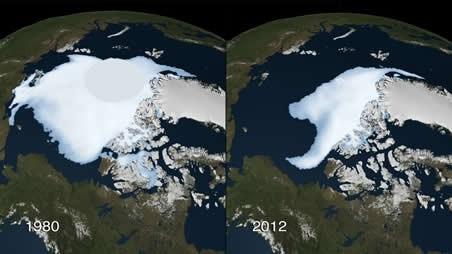
Satellite imagery showing the Arctic summer sea ice minimum in 1980 (left) and 2012

THE TRUTH, as Winston Churchill put it, is incontrovertible. “Malice may attack it, ignorance may deride it, but in the end, there it is”.

Scape away the layers of denial, obfuscation and spin that cloud climate change and one unvarnished truth emerges: the Arctic ice cap is dying – and with it, humanity’s best hopes for a prosperous, predictable future.

In the most dramatic reconfiguration of the map of the world since the end of the last Ice Age, the Arctic ice cap is now committed to accelerated collapse. In 2007, the IPCC warned that, unless emissions were drastically curbed globally, the Arctic ocean could be clear of summer sea ice towards the end of this century.

They were, it turns out, hopelessly optimistic. On September 16th last, Arctic sea ice hit its lowest level ever recorded, at 3.41 million square kilometres, barely half the 1979-2000 average. The area of sea ice lost is 41 times larger than the island of Ireland.

While the drop in sea ice extent is alarming, the 72% decline in its volume is worse. Not only is overall ice cover shrinking, the surviving ice is thinning precipitously.

Prof Peter Wadhams of the Polar Ocean Physics Group described the September 2012 figures as a “global disaster”. He now projects the total destruction of Arctic summer sea ice by 2015-16 – more than half a century ahead of the IPCC’s projections. “The final collapse towards that state is now happening and will probably be complete by those dates”, he added.

It is difficult to overstate the magnitude of what is now unfolding in the Arctic region. The Arctic ice cap used to cover 2% of the Earth’s surface, and the ice albedo effect meant that vast amounts of incoming solar energy were bounced back into space from the bright white ice mass. Losing this ice, and replacing it with dark open ocean creates a dramatic tipping point in planetary energy balance.

“The extra radiation that’s absorbed is, from our calculations, the equivalent of about 20 years of additional CO2 being added by man”, Prof Wadhams added.

With global carbon dioxide (CO2) emissions already spiralling far beyond the levels that scientists have warned present grave risks to humanity, the injection of a massive new source of additional energy into Earth systems could hardly have come at a worse time.

The northern hemisphere is already experiencing sharp foretastes of future climate destabilisation driven by the Arctic meltdown. The jet stream, which operates between the cold Arctic and the warmer mid-latitudes, dominates much of our weather, and it is weakening and becoming more erratic as Arctic ice melt accelerates and the region warms.

The severe cold snaps that brought Ireland to a shivering halt in 2010 and again in 2011, as well as this summer’s relentless rainfall are likely connected to Arctic ice cover loss. Jet stream weakness is leading to what are known as blocking events – episodes of extreme weather, be they droughts, freezes or flooding, persisting for unusually long periods.

The Russian heatwave of 2010 and the extreme US drought this summer are two more related events. “We’re in uncharted territory”, says James Overland of the University of Washington. The weakening jet stream means “wild temperature swings and greater numbers of extreme events”.

The last time the Arctic is believed to have been ice-free is during the Eemian period, around 125,000 years ago, when global sea levels were between 4-6 metres higher than today. However, current atmospheric CO2 levels are already far higher than during the Eemian – indeed, you have to go back several million years to find any era in Earth history to match today’s levels of this powerful heat-trapping ‘greenhouse gas’.

Lags in the system mean that we have so far experienced only the very mildest of the effects of the ever-growing heat imbalance in our climate system. In July, another stark regional landmark was recorded. In the course of just four days, surface ice melt spread from 40 to 97 per cent of Greenland. “This was so extraordinary that at first I questioned the result: was this real or was it due to a data error?”, said Son Nghiem of Nasa. Meanwhile, in the period between 2003-2008, more than two thousand billion tonnes of land ice from Greenland, Antarctica and Alaska have melted.

As the Arctic summer ice pack is floating, its melt does not directly raise sea levels, but as it spirals towards final destruction, all bets are off as to the stability of the adjacent massive land-based Greenland ice pack. There is enough frozen water locked up here to raise global sea levels by 6-7 metres over time.

One man’s global catastrophe is another’s commercial opportunity. Governments and energy companies, notably Shell, are busy jostling to be in position to loot the Pandora’s Box of oil and minerals hidden beneath the region’s fast-disappearing ice. In truth, this follows the same perverse logic as setting your house on fire to keep yourself warm.

John Gibbons is an environmental writer and commentator.
He is on Twitter: @think_or_swim

Posted in Biodiversity, Global Warming, Irish Focus | Tagged , , , , , | 9 Comments

Mental blocks contribute to our inaction on climate change

My article, as it appeared in yesterday’s Irish Times. There’s a busy comments section attached, with the usual handful of hard chaws piling in to an otherwise productive discussion…

IT’S REASSURING to imagine we are, by and large, rational beings who base our judgments and decisions on the best evidence we can muster.

The scientific evidence suggests otherwise.

Nowhere can the limits of human rationality be more forcefully encountered than in how we have collectively failed to respond to the existential threat posed by climate change.

Recessions threaten our jobs and income, while fears about terrorism or crime may undermine our sense of well-being. Climate change is uniquely different in that at its heart, it threatens to unravel our most fundamental assumption: that we, as individuals, indeed, as a species, have a future at all.

If this comes as a surprise, you are by no means alone. “We have Palaeolithic emotions, medieval institutions and God-like technologies,” is how noted Harvard biologist EO Wilson framed our dilemma. Many scientists suspect the general public is too wedded to magical thinking and heuristic reasoning to truly grasp the implications of what climate science has been spelling out with ever-greater urgency for the last two decades. This is at best a limited explanation.

Evidence from behavioural and brain sciences points to the fact that “the human moral judgment system is not well equipped to identify climate change – a complex, large-scale and unintentionally caused phenomenon – as an important moral imperative”, according to a recent article in the science journal, Nature – Climate Change.

The researchers identified key reasons why, despite the mountains of hard scientific evidence, we have signally failed to react to the colossal threats posed by climate change.

First, our moral intuitions are strongly driven by emotional responses. For instance, witnessing someone injure a child evokes a powerful visceral moral response. Climate change also threatens our children, but understanding exactly how “requires cold, cognitively demanding and ultimately less motivating moral reasoning”.

Second, the harms arising from pollution and resource depletion are a real but largely unintended by-product of economic activity. Neuroscientific evidence shows that we react much less to actions, however dangerous, if we see them as unintentional. Third, thinking about environmental damage makes us all squirm a little, as we know deep down that our flat-screen TVs, foreign holidays and affluent lifestyles are part of the problem. “To allay negative recriminations, individuals often engage in biased cognitive processes to minimise perceptions of their own complicity.”

In other words, we try to deflect our own feelings of guilt by decrying “corrupt” scientists and, by clutching to trivial errors or controversies, hope to reason away incontrovertible evidence amassed by teams of scientists of the calibre of those remotely operating the Mars rover.

Another roadblock is moral tribalism. People who identify themselves as liberals base their moral priorities around harm and fairness, while conservatives strongly value in-group loyalty, respect for authority and purity/sanctity. People’s group identification strongly colours their views on political issues, and once a position takes hold, confirmation bias means we seek out views that support our own and readily dismiss alternate explanations.

This explains how the deliberate politicisation of the science of climate change has allowed many otherwise intelligent, educated people (most notably, conservative white males) to reject objective scientific facts from credible sources in favour of shabby but reassuring conspiracy theories.

The final factor at work is the perception that climate change is a threat that affects others who live elsewhere – either people in distant countries or from future generations. We can easily frame them as out-group members, somehow different from us and, so, less deserving of our concern.

Helpfully, the researchers also developed pointers for communicators to bolster the recognition of climate change as a profound moral imperative. First, they suggest using moral frameworks that appeal to conservatives as much as liberals. Framing environmental damage as profaning creation has traction with some religious conservatives.

Next, psychologists have established that messages focusing on the likely future burdens of unmitigated climate change, from severe weather and coastal inundation to the spread of diseases, are more effective than “selling” the idea of potential future benefits, such as a stable climate. Of course, blunt messaging about the risks of climate change can backfire, with some individuals simply “tuning out” such warnings. Linking action on climate change to positive moral emotions such as pride and gratitude can provoke a pro-social response that rewards respondents with feelings of well-being.

How we discuss the likely victims of climate change matters too. A phrase like “future generations” sounds hollow, but when that becomes “my children or grandchildren”, these victims are no longer quite so faceless or forgettable.

 John Gibbons is an environmental writer and commentator. Twitter:@think_or_swim


Posted in Biodiversity, Global Warming, Psychology | 7 Comments

Myths and mischief-making in renewable energy reporting

I couldn’t have claimed to be Ireland’s greatest fan of wind energy. Not because I don’t think it’s a good idea – it is – but rather, my concern is whether it will ever be deployed on a scale sufficient for this country to break its dependence on (imported) fossil energy, while supplying a grid that, at peak, could require up to 7,000mw of energy. Also, what happens when the wind drops entirely?

These are all valid questions, so I was pleased on Sunday last to happen upon an extended feature on wind energy on RTE Radio’s flagship ‘This Week’ programme. It was truly an ear-opening broadcast. The reporter opened by pointing out that there is already 1,700mw (well, it’s actually 1,900mw) of wind power on the system, and that under binding EU emissions mandates, Ireland is committed to getting its renewables up to 40% within the next eight years.

Ken Matthews, CEO of the Irish Wind Energy Association (IWEA) told reporter, Anne Marie Green that around 2,000 people are already employed in our wind energy sector, a figure he suggested could rise to 10,800 if Ireland stays on target for its 2020 renewables commitment. The wind energy already on the grid is already saving Ireland some 21% on its annual bill for imported gas that we no longer need to buy, Minister Pat Rabbitte told Green later in the report.

So, a good news story at last for Ireland – clean, zero carbon energy, produced locally, creating employment, cutting imports and offering Ireland the prospect of independence from the ever more volatile international energy marketplace. Oh, and with the prospect of Ireland becoming, for the first time in its history, an energy exporter (to the UK, via the East-West 500mw interconnector). In these tough economic times, RTE has, it seemed, identified one story that ought to have everyone cheering. Right? Well, not exactly.

Matthews told Green that “a typical 100mw wind farm would have around 20 people employed on an ongoing basis”. Cut to the reporter: “Well that’s not quite true”. Quoting Angus McCrone, described as Bloomberg’s New Energy finance editor, he said that operating wind farms would “only employ 0.1 persons per megawatt, so, with the 4gw programme for Ireland, that’s only 400 people for the entire program”. Back to Green: “So that’s half the number of sustainable jobs the IWEA claimed could be created while there are considerable numbers of jobs in construction, there’s no guarantee they’ll go to Irish workers”, she intoned darkly.

To support her view, we get the voices of (nameless) members of the community in Moyross, Co. Galway who, says Green, “don’t buy the promise of jobs for the local community”. One local spelled out the shocking truth: “The day we went over there (to the wind farm site) there was a Cork company in there with the crane hire, it’s outside machines, no local people working here, there’s actually a couple of people from Scotland and London in here. No locals”.

Green’s piece was about to , with the introduction of her Star Witness, one Prof Gordon Hughes, economist with the University of Edinburgh, and introduced by RTE as “an advisor on energy policy to the World Bank”. Readers of tabloids like the Daily Express and Daily Mail will know all about Prof Hughes, who has a part-time post in Edinburgh, and otherwise busies himself writing politically loaded anti-environmental ‘reports’ for the London-based Global Warming Policy Foundation (GWPF). This is a right wing climate denial think tank fronted by Tory grandee Nigel Lawson that refuses to identify the shadowy sponsors of its voluminous output of pseudo-science aimed at providing the lay press with technical-sounding (but false) ‘alternate’ explanations for climate change. Oddly, neither RTE nor Prof Hughes thought to identify his huge undeclared interest in this matter.

Hughes can be a little creative with his numbers. “Among the more absurd assertions put forward in this [Hughes’s] paper is the contention that wind energy is 10 times more expensive than gas, but his comparison is flawed. He fails to include the cost of gas itself and only includes the cost of building a gas-fired power station and the infrastructure to go with it.” That was the response of Maria McCaffrey of the RenewableUK to one of Hughes’s recent reports.

Hughes is a favourite go-to boffin for the UK tabloids, whose billionaire owners especially enjoy rubbishing environmental and renewable initiatives at every turn. Hughes’ calculation that the average energy bill for a British family would rise by £300 due to the need to subsidise wind power. This turns out to have been one sixth of the estimate by the UK Government’s own Committee on Climate Change.

Digging a little deeper into this expert upon whose opinion RTE placed so much weight on Sunday, I found an eye-opening interview with Hughes, under the alarming heading ‘We can adapt!’. Here’s a nugget on ecosystem destruction: “First of all, replacement of ecosystem services turns out to be not very costly. Secondly, if you want to gauge, for example, the cost of relying upon sea walls instead of mangroves, it is difficult to estimate how much people might pay to protect ecosystems rather than build artificial substitutes. So that is something we haven’t done.” So, flatten the ecosystem, and ‘replace’ its services – viola!

As only an economist can do with a straight face, Hughes talks up all the positive aspects of the coming climate collapse: “Take Brazil the Southeastern region around Sao Paolo is booming and may benefit from climate change”.

There is no escaping the fact that, even among proponents of renewable energy, there are serious, valid questions to be asked about upscaling large amounts of wind energy onto our national grid. But rather than relying, as RTE chose to do, on an economist who’s in denial about climate change for expert views, I looked instead to a recently published peer-reviewed report by the independent UK think tank, the Institute for Public Policy Research (IPPR).

Their report, entitled Beyond the Bluster examined evidence from Ireland, Spain and Portugal as well as within the UK. The conclusions are surprisingly strong:

“This report shows unequivocally that wind power can significantly reduce carbon emissions, is reliable, poses no threat to energy security, and is technically capable of providing a significant proportion of the UK’s electricity supply with minimal impact on the existing operation of the grid. Claims to the contrary are not supported by the evidence.”

Nowhere over the course of an extended piece did the RTE reporter at any time appear to be aware of the fact that a critical reason for switching our energy systems to renewables is the urgent need to move towards zero-emissions energy. Green referred to turbines as having a “big impact on the landscape”, but Rabbitte tartly replied that “the landscape will be damaged if we don’t address the environmental issues”. That is, quite frankly, putting it mildly. A reporter who does a story on renewable energy while avoiding all mention of emissions is like a sports reporter covering a match but neglecting to mention the score.

While being utterly unaware (or unconcerned) about the two most important reasons why governments are pushing renewables – energy security and emissions reduction – the reporter was instead deeply concerned that, apart from construction, not that many of what she referred to as “sustainable jobs” arise from completed wind farms. This is broadly true. On the other hand, Denmark, which is both a major turbine manufacturer and user of wind power, has some 25,000 people directly employed in wind energy, many of them highly skilled graduate level jobs.

But even if a wind turbine farm produces relatively few jobs, so what? What’s important is the energy being produced. In fact, if only 400-500 people are required to operate and maintain a massive national wind system producing 4gw of power onto the grid, and another, similar sized number of wind farms producing huge amounts of clean power to sell to the UK, what matters is the efficiency, not the numbers employed. For example, a single driver operates an 8-carriage DART. By RTE’s logic (and perhaps reflecting their own historic staffing levels) it would be better to have 10 staff milling around the base of each wind turbine if “job creation” rather than service delivery is your sole measure.

But the truly grim spectre invoked by this RTE report is of the blight of ghost estates of wind turbines, just sitting there ahem, spinning away, making zero carbon electricity by the bucket load and earning the easiest of easy money. Or, as Green put it, “it just sounds like the property industry (bubble) all over again short term working in construction, people digging roads “. Well no, it sounds like the precise opposite, in fact. Rabbitte dismissed these bizarre, surreal arguments with his own bizarre, surreal response: “people in literature and the arts ought to be concerned about Utopia, but that’s not an argument for not creating jobs”.

Green then went on to bemoan the ‘subsidised’ price of wind energy. “I’m not an economist, but that’s what it seems to me what is the cost to the state of continuing to subsidise wind farms?”

Cutting to the chase, Rabbitte replied: “The logic of that argument is that you are suggesting we ought to leave ourselves at the mercy of the UK (energy market) in order to meet our energy supply needs, and that would be recklessly dangerous the UK has a (growing) need for energy and that’s why the prospect of developing an export sector is an win-win for Ireland and the UK”. There is also, he reminded her, the not inconsequential matter of the fact that we are legally mandated by the EU to reach tough renewables targets. Failing to meet them means paying over millions of euros in fines. This inconvenient fact also seems to have entirely escaped any editorial oversight within RTE.

Finally, and for the benefit of any visiting reporters who may be interested in doing a serious pieces on wind energy, here’s a few quick myths you can safely regard as officially debunked by the IPPR report (with thanks to BusinessGreen.com):

Myth 1: Wind energy subsidies push up energy bills

Fact: Renewable energy subsidies do add to energy bills, but “from 2004 to 2010, government support for renewables (in the UK) added £30 to the average energy bill while rises in the wholesale cost of gas added £290”.

Myth 2: Back-up power plants mean wind energy does not deliver net reductions in carbon emissions

Fact: In 2011, wind turbines in the UK provided 15.5 terawatt hours to the grid. Due to its lower marginal cost this power would have displaced fossil fuel power from the grid, meaning that wind energy saved a minimum of 5.5 million tonnes of CO2 if gas was displaced and a maximum of over 12 m tonnes if coal was displaced. “Following this logic we can say that, using government figures about electricity generated in the UK from wind and the carbon intensity of the very best available gas technologies, the CO2 savings from wind energy were at least 5.5 million tonnes in 2011. This is around 2.5 per cent of the emissions the UK is legally obliged to save annually from 2008 to 2012, as required by the Climate Change Act 2008.”

Myth 3: The powering up and down of fossil fuel plants to cope with wind energy intermittency undermines their efficiency and leads to a net increase in emissions

Fact: Empirical studies from US states with a high proportion of wind energy have shown “unequivocally” that wind energy supplies have “significantly” reduced the average carbon intensity of fossil fuel power plants on the same grid. In the Mid West average wind energy carbon savings reached 831kg/MWh, while in Texas they hit 474Kg/MWh.

Myth 4: The “intermittent” nature of wind power makes it impossible to manage

Fact: Wind power is not “intermittent” in that it does not suddenly and unexpectedly turn on and off in the way that fossil fuel and nuclear plants do. Instead it is “variable”, meaning that increasingly accurate weather forecasting makes it possible to predict changes in output ahead of time. This makes wind energy significantly easier to manage as you bring it on to the grid.

Myth 5: Variable wind energy outputs will disrupt the grid and lead to blackouts

Fact: The grid can cope and is coping with variable energy inputs from wind farms across the country. “Statistical analyses of lengthy records of wind farm output data indicate that the most extreme variations are of the order of 20 per cent of total wind generation capacity in half an hour (GL Garrad Hassan 2011).The highest rates of change are similar to the rates of change of electricity demand already experienced by system operators. For example, between 6am and 8am on weekday mornings as people get up, make breakfast and head to work. Therefore short-term changes in the rate of wind power output are easily accommodated in the existing system.”

Myth 6: If we increase our reliance on wind energy a still day will lead to power shortages

Fact: National Grid has stated that “should no changes be made to the way that the electricity system functions, 30GW of wind power can be accommodated on the existing grid”. Current plans for wind energy capacity in 2020 stand at 28GW. Beyond 2020 long, cold, calm spells could present a challenge, but there are several international precedents that demonstrate how grids can manage high levels of reliance on wind energy. For example, both the Iberian Peninsula and Ireland currently manage significantly higher proportional levels of wind energy than the UK and cope easily with calm periods. In addition, engineers are confident smart grid technologies and interconnectors with mainland Europe can provide a cost-effective long-term solution to the problem presented by calm periods. “The risks associated with ‘long, cold, calm spells’ have been overstated”.

Oh, and you probably heard the old yarn that the CO2 involved in manufacturing, transporting and erecting a wind turbine is more than it will save in its entire lifetime. Again, not exactly. A typical turbine will cover those costs in around 6 months of its projected 20-year life span. Not to mention the zillions of defenceless birds and bats slaughtered as they are cut to ribbons by the vicious turbines and the dreadful, ear-shattering noise these carbuncles on our landscape emit. Et cetera, et cetera etc.

Anyone seriously concerned about energy subsidies in Ireland might start with asking how it can be sane to spend two thirds of Ireland’s PSO (Public Service Obligation) subsidies keeping noxious, inefficient, environmentally insane and legally highly problematic peat-burning plants open? Well, yes, it’s a bit of auld job creation down Brian Cowen’s neck of the country, so that’s alright then?

Posted in Energy, Global Warming, Irish Focus, Sceptics, Sustainability | Tagged , , , , , | 7 Comments

Extraordinary, unprecedented – but still not newsworthy?

Earlier this month, something quite extraordinary and unprecedented occurred in Greenland. The satellite image on the left above shows (in red) the area of Greenland which was experiencing summer melt on July 8th. It amounts to around 40% of the island, fairly typical for the summer melt season. Just four days later (July 12th), updated satellite imagery (right) indicated that the melt had extended to blanket some 97% of Greenland.

NASA scientists were incredulous, indeed sceptical. Son Nghiem of NASA’s Jet Propulsion Laboratory in Pasadena, Calif., was analyzing radar data from the Indian Space Research Organisation’s (ISRO) Oceansat-2 satellite when he noticed that most of Greenland appeared to have undergone surface melting on July 12. Nghiem said, “This was so extraordinary that at first I questioned the result: was this real or was it due to a data error?”

According to NASA, this extreme melt event coincided with an unusually strong ridge of warm air, or a heat dome, over Greenland. The ridge was one of a series of such ridges, of ever-increasing strength, that has dominated Greenland’s weather since the end of May. This latest heat dome started to move over Greenland on July 8, and then parked itself over the ice sheet about three days later.

Even the area around Summit Station in central Greenland, which at 2 miles above sea level is near the highest point of the ice sheet, showed signs of melting. Such pronounced melting at Summit and across the ice sheet has not occurred since 1889, according to ice core analysis. A NOAA weather station at Summit confirmed air temperatures hovered above or within a degree of freezing for several hours on July 11-12. These are the temperatures being recorded on top of a two mile high glacier.

NASA, ever wary of being set upon by Tea Party fanatics and right wing Flat Earthers in the US, has been unusually equivocal about what this extraordinary incident may be telling us about the massive Greenland ice shelf. What we do know is that more than two thousand billion tons of land ice in Greenland, Antarctica and Alaska have melted between 2003-2008, according to NASA satellite data, which scientists say is unequivocal evidence that global warming is accelerating. We also know that, at just 1.6C of overall global warming, the entire Greenland ice sheet is committed to destruction, and no force on Earth can reverse that juggernaut once it’s rolling. And for the uninitiated, 1.6C is just down the road…

Greenland has locked up sufficient ice to raise global sea levels over time by an unimaginable seven meters, and in the process completely redraw the map of the world. When an ice shelf of this colossal magnitude begins to exhibit dramatic and unprecedented melting, that’s news. Big news. Well, apparently not. The story surfaced on the Irish Times’ website on Wednesday, but failed to make it into the newspaper either that day or today, Thursday, despite a whole ‘Science Today’ page being available.

Likewise, I waited in vain to see RTE pick up the story (which had been running all day on Sky) on its evening bulletins. The comatose state of science reporting €“ specifically if it has anything to do with climate change €“ in both the Paper of Record and the national broadcaster is bewildering. The story has quite literally disappeared – almost as fast as the Arctic sea ice cover, in fact. Sea ice in the Arctic has melted faster in 2012 than ever recorded before, according to the US government’s National Snow and Ice Data Centre (NSIDC). Figures for June 2012 showed 318,000 square miles less sea ice than the same period in 2007, which had been the year of the most dramatic Arctic ice loss ever.

Understanding how all these events are connected, and then connecting the ever-changing complexities of our weather systems against the backdrop of climate change is a task that even MET Eireann seems to have thrown in the towel on. Dr Gerry Fleming was interviewed last week ahead of the RTE documentary on weather forecasting, and was at pains to dismiss any possible connection between the string of extreme weather events that have battered Ireland in recent years, from record floods and freezes to monsoon-like rainfall and even mini tornados and the driving force of climate change.

Heavens no, what could this possibly have to do with the fact that the global climate system is unravelling? I can only assume that Gerry likes the quiet life, and knows he won’t draw the ire of RTE’s 60-something Angry White Men by suggesting that, whisper it, human forcings (aka dumping 30 billion tonnes of CO2 into a closed atmospheric system annually) may have a teensy tiny little something to do with our weather going haywire.

No no, proper forecasters don’t engage in such idle speculation about, you know, climate science and how it interacts with meteorology, and how the surplus heat accumulating in our atmosphere must inevitably come home to roost somewhere. Not our speciality, sorry. Have you tried Derek Mooney, maybe he’s got a funny angle on the whole thing?


Posted in Global Warming, Media, Sceptics | Tagged , , | 29 Comments

It’s a race to the bottom – we’re winning as the oceans die

To me, nothing says summer down-time quite like finding a shady spot on a warm day and settling in for a great read. This year, I had the good fortune of picking two exceptional books – ‘The Ocean of Life‘ by marine scientist Callum Roberts and ‘The Hockey Stick and the Climate Wars‘ by Penn State palaeoclimatologist, Michael Mann. (I’ll post a separate detailed review of the latter presently, and thread it with an intriguing recent appearance on NewsTalk to take part in the eternal: ‘climate-change-is-it-real-at-all-at-all’ debate that continues to rage in the minds of many Irish journalists).

The two styles contrast sharply, yet their conclusions, from widely different part of the scientific spectrum, are eerily similar. While the denial and denigration of science is at the heart of Mann’s book, it also forms a notable undercurrent for Roberts.

“Over the years I have come across spectacular levels of denial among fishing industry representatives I have seen them dig their heels in to resist regulations that could help fish stocks recover”. Politicians play along to the well-organised fishing lobby. “The relationship between politicians and the fishing industry in the EU has become like that of a doctor assisting the suicide of a patient”, is how he put it. I sincerely hope Simon Coveney reads this too.

World fisheries is now a globalised Ponzi scheme, with the fishing industry wiping out one area after another in pursuit of short term profit, then simply moving further and further afield in pursuit of new stocks. “Over time, fisheries have eaten up their capital stocks rather than lived within the limits of annual production. But fisheries are now failing (globally) because, like in a Ponzi scheme, they are running out of new capital”.

Overfishing and chronic pollution are just two of the threats to the world’s oceans. Global warming is now reaching into some of the remotest corners of the planet, and thousands of feet below the ocean’s surface. Air temperatures on the Antarctic Peninsula have risen an astonishing 11F in the last 50 years, leading to a 90% decline in populations of Adélie penguins on this peninsula.

Roberts explains lucidly how susceptible the seemingly mighty ocean is to surface warming. Much of the deeper oceans contain very little oxygen, and life there depends of mixing of the oxygen-rich surface waters, but the greater the temperature difference, the less mixing occurs, leading to the spread of low oxygen zones, which are deadly to almost all marine life. “Mass die-offs of marine life will become a regular feature of future oceans unless climate change can be halted”, he warns.

The last great warming period to rival 21st century projections occurred at the end of the Permian era 251 million years ago. Runaway global warming meant that “life in the sea suffered the one-two punch of anoxia and high carbon dioxide. It took five million years to recover”.

Ocean acidification is rapidly emerging as a threat to the marine world every bit as potent as global warming is for the land. He recalls the very human story of US marine biologist, Joanie Kleypas, a coral reef expert. While attending a meeting on climate change in 1998, Kleypas suddenly came to the full realisation that the world’s coral reefs could be obliterated by the end of the 21st century. She was so shocked she rushed out of the meeting to be sick in the bathroom. A simple doubling of CO2 levels from today’s values is sufficient to commit the world’s coral reefs, which have survived more or less intact for tens of millions of years, to destruction. We can actually trigger this apocalypse under an IPCC low emissions scenario.

Ocean of Life also gives us a glimpse into the wonders of the oceans. Viruses are the most numerous marine life-forms, outnumbering all other life-forms by 15-1. In total, there are an estimated 4 nonillion viruses in the sea. That’s a four, followed by 30 zeros. If all these individual viruses could somehow be placed end to end, “they would form a thread less than one two-hundredth of the thickness of the finest spider gossamer that would stretch for two hundred million light years.” The thread would stretch beyond the Milky Way and by some 60 adjoining galaxies and countless billions of stars.

As if surface warming, gross overfishing and acidification weren’t enough, the world’s oceans have become giant dumping grounds for millions of tons of plastic and other of our wastes. Plastic doesn’t go away, it just breaks down slowly over time into ever-smaller particles, many of which end up being ingested by various forms of marine life.

Phthalates, polystyrene, PCBs, styrene and mercury (mostly from coal burning) are among play the pokies online the many pollutants that find their way in quantity into our oceans. Some are endocrine disruptors, which are strongly implicated in a range of birth defects (in humans as well as other animals). Noise pollution from shipping, military sonar as well as deep sea surveying is another potent threat to cetaceans in particular, as they depend heavily on sound to communicate, feed, hunt and find mates.

If humanity had consciously sat down to draw up a plan to wipe all life from our oceans, we could hardly have accomplished our task more thoroughly. Species including turtles and sharks that quite literally shared the oceans with the dinosaurs, and who have weathered many disasters over tens of millions of years are proving no match for the most voracious and indiscriminate marine predator in all Earth history, homo sapiens.

Here’s one egregious example: “The carnage wrought by bottom trawling and dredging is multiplied from coast to horizon, and beyond. Virtually nowhere above three thousand feet is spared. Some places get hit once every five to ten years, while places where trawling is unusually intense can be trawled five times in a year”. This translates into almost unimaginable carnage: “more than 15,000 square miles of damaged, dead and dying bottom life every day” Annually, that’s a submarine area one and a half times the size of Europe wrecked. Why? Because we can, and because, for now, it’s profitable.

The scale of our ignorance of the multiplicity of connections in the fabric of life is breathtaking, says Roberts. “It would take a thousand lifetimes of research to figure out all of the ways in which we are affecting the species in an ecosystem of even moderate complexity”, he observes darkly.

The world is, he cautions, living on borrowed time. “We can’t cheat nature by taking more than is produced indefinitely, no matter how fervently politicians or captains of industry might wish it in essence what we have done in the last few decades is to mine fish, bringing them in at rates faster than they can replace themselves”. The price for today’s greed will be tomorrow’s hunger.

The mind-sets propelling these and related environmental disasters, including the unfolding calamity of climate change, present formidable challenges to any effort to put humanity on path towards sustainability. “We have Palaeolithic emotions, Middle Age institutions and God-like technologies” is how Harvard biologist EO Wilson pithily put it.

Defending nature is critical, even if only to protect our own narrow interests. “Nature conservation is too often perceived as a luxury, a view that has become embedded in attitudes and policies climate change is exposing the folly of our neglect for the ecological underpinnings of life”, argues Roberts. Phrasing this in more human terms, he suggests that if life were a multinational company, “many o fits subsidiaries would have gone under by now as a result of lost productivity. The whole business would be at risk of failure”.

The crushing irony for the fishing industry is that it is busy putting itself out of business by overexploitation and needlessly destructive and wasteful practices. Saving the fishing industry from itself is almost as formidable a task as wider marine conservation. A World Bank Report confirmed the utter lunacy of current fisheries policy and practice by pointing out that the world’s major fish stocks would produce 40% more if we simply didn’t insist on fishing them to the edge of extinction.

The UN Convention on Biological Diversity set a 2010 target to turn 10% of the world’s oceans into protected areas. To date, the figure is 1.6%. Roberts estimates that, to have any chance of allowing a recovery of our oceans, some 35% of the world’s oceans need to be off limits to untrammelled exploitation.  That puts that paltry 1.6% figure into its correct perspective.

The Ocean of Life is a masterly survey of the systems that comprise more than two thirds of our planet, yet are misunderstood and abused in almost equal measure. Roberts, a professor of marine conservation at York University is a skilled communicator who, unlike so many of his scientific colleagues, is able and willing to connect the dots, rather than simply beavering away at his own favourite sub-specialty.

What this survey reveals is disturbing, even distressing, but rest assured, the Irish public won’t have been unduly disturbed. Total coverage of this landmark publication to date in the Irish Times, Irish Independent, Evening Herald, Daily Mail, Sunday Independent, Sunday Business Post and on RTE radio or television: zero. Among the Irish media I’ve reviewed, only the Irish Examiner and Sunday Times found it worthy of editorial coverage.

As Roberts concludes: “You can’t cheat nature, however good you may be at spinning a story”.

Posted in Biodiversity, Global Warming, Habitat/Species, Media, Sustainability | Tagged , , | 4 Comments

Life on Earth now under threat as never before

Below, my opinion article, as it appears in today’s Irish Times:

WHEN WE put our mind to it, it’s amazing what we can learn to forget. Rio de Janeiro in June 1992 hosted one of the most important international conferences in history, now remembered as the Earth Summit. Some 172 governments were represented in Rio, from all ends of the political spectrum –Fidel Castro and George H. Bush were among the 108 heads of state who took part in this groundbreaking environmental congress.

The conference heard a remarkable address from a 12-year old Canadian girl, Severin Suzuki. She reminded delegates that, as adults, “you teach us how to behave in the world. You teach us not to fight with others, to work things out; to respect others, to clean up our mess. Not to hurt other creatures; to share and not be greedy – then why do you go out and do the things you tell us not to do?” On environmental damage, her message to world leaders was simple: “if you don’t know how to fix it, please stop breaking it!”

The guilelessness of a child’s earnest appeal captured the zeitgeist and helped shape the tone for the 27 Principles of the Rio Declaration, a bold document drawn up to guide humanity onto a sustainable path with the natural systems upon which we depend. Environmental protection was finally to be placed as a key pillar of all future human progress.

Later in 1992, a panel of 1,700 senior scientists issued a public appeal, headlined: ‘Warning to Humanity’. Humans and the natural world are, they warned, “on a collision course. Human activities inflict harsh and often irreversible damage on the environment if not checked, many of our current practices may so alter the living world that it will be unable to sustain life as we know it”.

The world, it seemed, had at last awoken to the severe ecological threats and was prepared to confront them squarely.

Then, as the years passed by, something truly astonishing happened: absolutely nothing. “Men occasionally stumble over the truth”, Winston Churchill once observed, “but most of them pick themselves up and hurry off as if nothing had happened”. Yes, UN institutions were built and treaties signed, but in reality the battle between the forces touting bare-knuckle economic growth and those arguing for planetary stewardship for future generations has been a rout.

What followed instead were two decades of relentless resource plunder, habitat destruction and pollution. This unprecedented, prodigal evisceration of the rich diversity of life on Earth has been celebrated as an era of record “economic growth”.

Fast-forward 20 years to 2012. The Rio+20 conference is now just a pared back three-day affair, with little of substance on the agenda and a clear lack of appetite for action, given that growth, at all costs, is being sold as the panacea for our (growth-induced) woes.

A leaked draft agenda for Rio+20 pointed out that: “unsustainable development has increased the stress on the Earth’s limited natural resources and on the carrying capacity of ecosystems. Food insecurity, climate change and biodiversity loss have adversely affected development gains.”

Many of the world’s leaders, from Barack Obama to Angela Merkel, are expected to snub the event. Ireland, which yesterday unveiled a pre-Rio document entitled ‘Sustainable Future’ (long on aspirations, short on binding commitments) is dispatching our accident-prone Minister for the Environment, Phil Hogan to Brazil.

We may as well have sent Jedward. That at least might have persuaded RTE that this event was actually newsworthy. Despite its extensive recent coverage of a song contest in Azerbaijan and daily reports from a court case in Mauritius, the station – which last year scrapped the position of Environment Correspondent – confirmed to me that it has “no plans” to cover Rio+20, citing budgetary constraints. It is not about budgets, it’s about priorities.

So what exactly is at stake? A major paper in the science journal ‘Nature’ argued that Earth is on the cusp of one of the greatest ever die-offs. “When we kick over into a mass extinction regime, results are extreme, they’re irreversible and they’re unpredictable”, said Dr David Jablonski of the University of Chicago. Prof Stuart Pimm of Duke University added: “we are living in geologically unprecedented times. Only five times in Earth’s history has life been as threatened as it is now”.

The fact that human activities are propelling this extinction event is in no way reassuring. Just because you pull the trigger doesn’t mean you can stop the bullet. For example, the Greenland ice pack is now losing an average of 250 billion tonnes a year in mass. Beyond a rapidly-approaching tipping point, that entire ice sheet is committed to melting over time, and no force on Earth can prevent it.

A large-scale 2009 study from MIT in Chicago projected, in the absence of policies to drastically reduce CO2 emissions, average global temperature increases this century of 5.2C (with a 90 per cent probability range of 3.5–7.4C). These numbers vary in likely impacts from widespread chaos to an epic extinction event sweeping away most living things.

But are there alternative paths? “Economic growth is mistakenly seen as synonymous with well-being”, according to the prime minister of Bhutan, Jigmi Thinley. “The faster we cut down forests and haul in fish stocks to extinction, the more GDP grows.” Worldwide, fossil fuel subsidies are worth over $400 billion annually, six times more than global spending on renewable energy. Tackling this perverse incentive to polluters alone would be an enormous step towards stabilising the climate system.

Mistaken ideologies and distorted politics make a resolution of our ecological crux all-but-impossible within the prevailing growth-fixated paradigm. “The current political system is broken”, according to the UK government’s chief science advisor, Dr Bob Watson. “Nothing has changed in 20 years, we are not remotely on a course to be sustainable”. In the same 20 years, Ireland’s average temperature has increased by 0.75C, exactly in line with a projected 4C calamity this century.

Tragically, there is little on the table for Rio+20 capable of putting a dent in our trajectory towards global system failure in the coming years and decades. And not only is humanity failing to act, we in Ireland don’t even want to talk about it.

John Gibbons is an environmental writer and commentator. He is online at Thinkorswim.ie and tweets @think_or_swim

Posted in Global Warming, Habitat/Species, Media, Sustainability | Tagged , , | 8 Comments

Doom with a view? Trap tightens on our diminishing prospects

In the current issue of ‘Village’ magazine, editor Michael Smith has explored at length and in some depth the array of formidable challenges that humanity (and all other species on Earth) face in the years and decades ahead. It’s a glimpse beyond the institutionalised cornucopianism of mainstream economics and the pervasive techno-optimism that insists that, whatever the problem, we can collectively ‘fix’ it, by some ingenious combination of innovation and growth.

But what happens when ‘growth’ is not the solution, but an integral part of the problem? What if our dreams of  a future empowered by glittering and as yet undiscovered new technologies turns out to be a fossil-fueled chimera? Us humans are natural optimists. Two centuries of exponential growth of industrial civilisation has utterly inured us to the fact that growth is, at most, a transient phase in the life of any organism – or society. And so we shuffle towards the era of permanent crises and sharply diminished opportunities, ill prepared for the very different future that awaits…

Michael Smith’s article is reproduced below:

—————————————————————————

John Gibbons’ article in the April Village called for recognition that we have moved from an environmental problem for which there might have been a solution to an environmental predicament where we have to accept that there is no solution, and prepare; in a fight, not for sustainability, but for survival. Many informed environmentalists, such as the encyclopaedic Gibbons, to whom I am grateful for a long reading list, have become doomsters. Some are almost competitively pessimistic. On this most important issue for humanity should even sceptics accept we are doomed?

THE PROBLEM

Humanity faces significant challenges and crises in the coming years and decades. The effects of Peak Oil, Resource and Biodiversity Depletion and Climate change are beginning to tell. Whereas these problems are often viewed as problems for the future to be solved by another generation (the refrain is always, “we have ten more years”), it is now clear that these problems are already having an impact. We are already in the age of consequences for our own profligacy.

Of course society at large (from the political classes right down to the man in the street – not you, dear reader) is in denial about these problems – desperately hoping for the best and craving a return to economic growth. This denial is unlikely to be shifted until a major crisis, worse than mere crippling austerity, hits. While no one knows the time or order of crises or where they will fall – banking and the Euro are plausible precipitants – preparation for resilience is imperative.

Doomsters tend to centre on the viewpoint adumbrated by Clive Hamilton, author of the fairly doom-laden, Requiem for a Species: “The truth is green consumerism has made virtually no difference and shifts responsibility from the shoulders of the big polluters and governments that need to introduce the policies onto individuals. Individuals as citizens – that is political actors – can be very effective because it is only through far-reaching mandated policy change that we will get anything like the response we need”.

But what is their case?

THE CASE FOR CRISIS

1) PEAK OIL

Peak oil is a concept devised in 1956 by M King Hubbert who correctly predicted that oil output in the lower 48 US states would peak around 1970. “The existing fields are declining so sharply that in order to stay where we are in terms of production levels in the next 25 years, we have to find and develop four new Saudi Arabias”, according to IEA. Of course, there never will be another oil field found as enormous as Saudi Arabia, let alone four.

Highlighting peak oil poses political dangers since arguing that we are running out of oil just gives oilmen a licence to advance all the unsustainable new techniques they’ve been hatching.

The president of Royal Dutch Shell’s US operations, John Hofmeister, points to the large reserves at the US outer continental shelf, which holds an estimated 100 billion barrels of oil and natural gas. As things stand, however, only 15% of those reserves are currently exploitable. The fast-changing Arctic may yield significant volumes of oil. The Canadian oil sands – a natural combination of sand, water, and oil found largely in Alberta and Saskatchewan – are believed to contain one trillion barrels of oil. Another trillion

barrels of “oil shale” are also said to be trapped in rocks in Colorado, Utah, and Wyoming. The US federal Energy Administration reckons shale could increase the world’s technically-recoverable gas resources by 50%. The Financial Times considers shale in itself calls into question the assumption of peak oil.

Nevertheless, obviously these reserves present major environmental, social, and economic obstacles to recovery. Their production also require significant amounts of energy. Diminishing energy return on energy invested (EROI) will certainly diminish economic growth, in a world that since the second world war has been dangerously oil-dependent. An overall perspective comes from the Economist magazine which cites a study that “based on an expected 0.9% annual increase in production over the next decade, real oil prices will nearly double”, causing damage that is “modest, perhaps 0.2% of global GDP a year. On the most extreme assumptions, it could be 2% a year”.

Dr Christoph R¼hl, chief economist of BP, also doubts the peak-oil hypothesis: Climate Change “is likely to be more of a natural limit than all these peak oil theories combined. Peak oil has been predicted for 150 years. It has never happened, and it will stay this way”. According to R¼hl the oil difficulty is about price and not the basic availability.

Optimists assume major investments in alternatives will occur before a terminal energy crisis, without requiring major changes in the lifestyle of heavily oil-consuming nations. These models show the price of oil at first escalating and then retreating as other types of fuel and energy sources are used.

On the other hand, a 2010 report from Feasta, the Irish-based Foundation for the Economics of Sustainability argues that energy flows will falter and that: “there is a high probability that our integrated and globalised civilisation is on the cusp of a rapid and near-term collapse”. What this means for countries like Ireland is that “starvation and social breakdown could evolve rapidly”, according to report author, David Korowicz. A 2010 German army report, drawing upon research by The Risk/Resilience Network and also from Feasta, argues, in the event of energy shortage:

“Investment will decline and debt service will be challenged, leading to a crash in financial markets, accompanied by a loss of trust in currencies and a break-up of value and supply chains-because trade is no longer possible. This would in turn lead to the collapse of economies, mass unemployment, government defaults and infrastructure break- downs, ultimately followed by famines and total system collapse. David Korowicz argues on a more fundamental level that “there may indeed be plenty of fossil fuels left in the ground, but following a major systemic collapse, most may remain there” since the capacity to extract them will be destroyed early on.

While Korowicz’ vision is credible it does not seem probable. Surely humankind has the wit to come back from systemic collapse – even if at devastating cost? There is no evidence that our awareness of what it takes to survive is petty.

Scale of problem: 2 (climate change will pre-empt it and technology will delay it).

2) SPECIES LOSS

Of all the ecological problems humans are so casually generating, species loss is the most clearcut and the most under-recognised. No doubt this reflects Man’s Narcissism. The world is losing species at a rate that is 100 to 1000 times faster than the natural extinction rate and the pace is speeding up. The International Union for Conservation of Nature believes that 25% of mammals now face extinction globally. The WWF’s Living Planet Index (which measures trends in biological diver- sity) found that between 1970 and 2007 global biodiversity had declined by an astonishing 30 per cent. The UN Environment Programme con- curs, adding: “The world is currently undergoing a very rapid loss of biodiversity comparable with the great mass extinction events that have previously occurred only five times in the Earth’s history”.

The mass die-off of the Sixth Extinction that has already spelled the end for vast swathes of the natural world has not – yet – impacted directly on the authors of the die-off, humankind. But since we are perched precariously at the apex of a global food chain it is no longer a matter of if, but when, and just how severe it will be. Mass extinctions of species have occurred five times previously in the history of the world – the Fifth Extinction was 65 million years ago when the dinosaurs and many other species disappeared. Previous periods of mass extinction and ecosystem change were driven by global changes in climate and in atmospheric chemistry, impacts by asteroids, and volcanism.

Extinction is mainly being caused by habitat degradation, whose effect on biodiversity is worsened by ongoing human-induced climate change. A hundred researchers and policy experts from EU countries met in January to discuss how to organise the future UN Intergovernmental Panel for Biodiversity – an equivalent to the UN panel on climate change (IPCC). They concluded: “The biodiversity crisis – i.e. the rapid loss of species and the rapid degradation of ecosystems – is probably a greater threat than global climate change to the stability and prosperous future of humankind on Earth. There is a need for scientists, politicians and government authorities to closely collaborate if we are to solve this crisis”.

Local manifestations of this are ubiquitous. For example a January New York Times article reports on an eight-country investigation of the fishing industry in the southern Pacific shows how jack mackerel stocks “have dropped from an estimated 30 million metric tons to less than a tenth of that in two decades, perhaps foretelling the progressive collapse of fish stocks in all oceans”.

Scale of problem: 8 (the figures speak clearly for themselves)

3) OCEAN ACIDIFICATION

The World’s oceans are acidifying faster than at any time in the last 300 million years, harbinging mass marine extinction .

In a Columbia University review of hundreds of paleoceanographic studies reported earlier this year in Science journal, a team of international scientists found that a steep rise in atmospheric levels of carbon dioxide has driven down pH levels

in the oceans by 0.1 over the last century, to about 8.1, a decline ten times faster than the closest historical comparison – a period of acidification 56 million years ago that triggered a massive ocean die-off. The oceans are vulnerable because they absorb excess carbon dioxide from the atmosphere, turning the water more acidic, which can inhibit organisms, such as oysters and coral reefs, from forming shells.

“We know that life during past ocean acidification events was not wiped out – new species evolved to replace those that died off,” says Barbel Honisch, lead author of the study. “But if industrial carbon emissions continue at the current pace, we may lose organisms we care about – coral reefs, oysters, salmon”.

While acute concern is justified this and other research makes no attempt to assess the probability of oceanic catastrophe. The Science Article is full of ‘may’ and ‘some’.

Scale of problem: 5

4) CLIMATE CHANGE The dramatic party-pooping truth is that the rich West needs actually to REDUCE emissions 90% by 2030 to avert a further rise of more than 1.2°C heat which could cause the Greenland icecap to melt and the Amazon forest to die, precipitating runaway global warming. This is feasible if developed countries peak their emissions in 2015 and decline them by eight or nine percent a year afterwards. Developing nations are morally due perhaps an extra decade before they need to undergo the same decline. We can’t mess around with this target.

According to Kevin Anderson, formerly head of the Tyndall Institute, Britain’s leading climate research centre, 4°C, for example “is absolutely catastrophic”. In fact, according to the latest science, he says, “a 4°C future is incompatible with an organized global community, is likely to be beyond ‘adaptation’, is devastating to the majority of ecosystems, and has a high probability of not being stable”. The International Energy (IEA)’s chief economist, Fatih Birol, believes that with current climate policies the world is “perfectly on track” to cascade through this en route for a six degree calamity, “unless there is a shift away from some of the fossil fuel energy now used for electricity generation and transportation”.

Munich Re, one of the world’s biggest insurance firms and hardly a hysteric, quoted in the Insurance Daily in November 2011 argues that the 2°C-over-pre-industrial-levels target that scientists consider the maximum for containing global warming within manageable limits is virtually no longer attainable. We are already up .8 of a degree. A 2010 Royal Society article by Kevin Anderson and Alice Bows summarises: “The analysis suggests that despite high-level statements to the contrary, there is now little to no chance of maintaining the global mean surface temperature at or below 2°C.

Moreover, the impacts associated with 2°C have been revised upwards so that 2°C now more appropriately represents the threshold between ‘dangerous’ and ‘extremely dangerous’ climate change”. According to the likes of David Roberts writing on the blog site, Grist, today the exact same social and political considerations that settled on 2°C as the threshold of safety by all rights ought to settle on 1°C. Emphasising that we have failed to account for likely emissions from India and China, Anderson and Bows go on: “Ultimately, the science of climate change allied with the emission scenarios for [developing and non-developing] nations suggests a radically different framing of the mitigation and adaptation challenge from that accompanying many other analyses, particularly those directly informing policy”.

While almost all political views on the climate crisis must be discounted for the usual time-serving cowardice, a conservative informed view – albeit weakened by the tempering effect of collegiality – is that of the IEA which overall thinks it is still worthwhile trying to counter climate change. Its director wrote in the OECD Yearbook earlier this year: “The door is closing to achieving climate change goals which limit temperature increases to 2°C, and on our current path by 2017 we will have ‘locked in’ long-lasting carbon-spewing infrastructure unless we change the nature of what is being built between now and then”.

Still, the news for optimists, like you and me, is not good. Global carbon emissions in 2010 exceeded worst-case scenario predictions from just four years before, according to the US Department of Energy (DOE). A rise of 6 percent (564 million additional tons) over 2009 levels was largely driven by three nations: the US, India, and China. Emissions from burning coal jumped 8 percent overall. Most climate modelling scenarios, e.g. the Stern Report – which posited emissions peaking in 2015-16 – underplay the current rate of emissions growth, leading to sunnier-than-justified results.

Optimists need to look at the evidence on the ground: a decade ago scientists predicted the Arctic wouldn’t be ice-free in summer until 2100. But summer ice in the North has rapidly shrunk and today covers 70 percent of the area it did in 1979. Now some scientists think the Arctic could be open water within 25 years. Last August, a team led by the University of York published a study showing that plants and animals are moving to higher elevations twice as fast as predicted in response to rising temperatures. They’re migrating north three times faster than expected, they found. As for extinctions, earlier this year two scientists at the University of Exeter paired predicted versus observed annihilation rates. The real-world rates are more than double what the best computer modelling showed: While the studies, on average, warned of a seven percent extinction rate, field observations suggested the rate was closer to fifteen percent.

What can we do?

The longer we delay the emissions peak the heavier and more precipitous must reductions be. Roberts continues: “How about 2020? Of the available scenarios for peaking in 2020, says Anderson, 13 of 18 show hitting 2°C to be technically impossible. (D’oh!) The others involve on the order of 10 percent reductions a year after 2020, leading to total decarbonization by 2035-45. Just to give you a sense of scale: The only thing that’s ever pushed emissions reductions above 1 per- cent a year is, in the words of the Stern Report, ‘recession or upheaval’. Stern considers emissions reductions of three to four percent a year are the maximum compatible with continued economic growth. The total collapse of the USSR knocked five percent off its emissions. So ten percent a year is like … well, it’s not like anything in the history of human civilization.

This, then, is the brutal logic of climate change: With immediate, concerted action at global scale, we have a slim chance to halt climate change at the extremely dangerous level of 2°C. If we delay even a decade – waiting for better technology or a more amenable political situation or whatever– we will have no chance”. The problem with climate change is that it is self-accelerating and non-linear.

Positive Feedback

There are many climate feedback mechanisms in the climate system that can either amplify (‘positive feedback’) or diminish (‘negative feedback’) the effects of a change in climate forcing. For example, as rising concentrations of greenhouse gases warm Earth’s climate, snow and ice begin to melt. This melting reveals darker land and water surfaces that were beneath the snow and ice, and these darker surfaces absorb more of the Sun’s heat, causing more warming, which causes more melting, and so on, in a self reinforcing cycle.

Atmospheric Vapour

As the atmosphere warms due to rising levels of greenhouse gases, its concentration of water vapour increases, further intensifying the green- house effect in a self-reinforcing cycle. This water vapour feedback may be strong enough to approximately double the increase in the greenhouse effect due to the added CO2 alone.

Cloud Cover

Clouds are effective at absorbing infrared radiation and therefore exert a large greenhouse effect, thus warming the Earth. Clouds are also effective at reflecting away incoming solar radiation, thus cooling the Earth. Much research is in progress to better understand how clouds change in response to climate warming.

Permafrost

Another feedback is the melting of permafrost in Northern forest regions such as Siberia and parts of North America, resulting in the release of methane, a potent greenhouse gas, and CO2 from soil organic matter.

Ecosystems

Increasing temperatures could cause the dieback of high-carbon ecosystems, such as the Amazon flipping these regions from carbon ‘sinks’ into carbon sources.

Tipping point

A recent article by Jerry McManus on tipping points is illustrative: any one of the positive feed- backs “could be dangerous, but taken all together and greatly magnified by feedback delays measured in decades if not centuries then it becomes clear that the crisis we face completely dwarfs the problem of CO2 concentrations alone. We are altering both the chemistry of the atmosphere and the composition of the biosphere at a rate orders of magnitude greater than that seen in the geologic past.

At this point even cutting CO2 emissions to zero would be woefully inadequate, we would still need to take desperate measures in an attempt to restore the previous balance by putting in place global negative feedbacks. Reforestation, carbon sequestration, cloud seeding, all this and more while at the same time we power down and depopulate to levels last seen many decades ago. Unfortunately, given both the enormous challenge of such an undertaking compounded by the very long feedback delays in the climate system we would probably need to have started such a program many years ago. We may have already passed the tipping point of no return”.

Climatic manifestations of Climate Change

Looking at the precise consequences of climate change it is projected by the IPCC, with what is described as medium confidence, that approximately 20 to 30% of plant and animal species assessed so far (in an unbiased sample) would likely be at increasingly high risk of extinction should global mean temperatures exceed a warming of 2 to 3°C above pre-industrial temperature levels. The uncertainties in this estimate, however, are large: for a rise of about 2°C the percentage may be as low as 10%, or for about 3°C, as high as 40%; and depending on biota (all living organisms of an area) the range is between 1% and 80%. As global average temperature exceeds 4°C above pre-industrial levels, model projections suggested that there could be significant extinctions (40-70% of species that were assessed) around the globe.

Looking at Ireland, where already six of the ten warmest years since 1890 have occurred since 1995, as an example: predicted changes in Ireland’s climate as a result of climate change include: By 2050 there will be an increase in January temperatures of 1.5°C and in July temperatures of 2.5°C. Changes in rainfall and precipitation patterns: a marked reduction of between 25% and 40% in summer rainfall is possible, according to predictions, as well as perhaps some winter rainfall increases. The frequency of severe storms coming to Ireland from the Atlantic Ocean may increase by about 15%. There will be an increase in extreme weather events: such as floods, droughts, heat waves etc. Also, rapid ice melt in the Arctic region disrupting ocean currents also increases the risk of severe cold snaps in Europe recurring in the medium term.

Non-Climatic Manifestations of Climate Change

A) Melting Ice and rising sea levels. Some 4.3 trillion (yes, trillion) tons of ice were lost globally 2003-10. The total global ice mass lost from Greenland, Antarctica, and the rest of Earth’s glaciers and ice caps during the period 2003-2010 was about 4.3 trillion tons contributing about 12 mm to global sea levels. The loss is roughly enough to cover the United States in half a metre of water.

In 2007, the IPCC projected that, during this century, sea-level will rise another 18 to 59 cm. The figures do not allow for “uncertainties in climate-carbon cycle feedbacks nor do they include the full effects of changes in ice sheet flow”. Although the IPCC explicitly refrained from projecting an upper limit of total sea-level rise in the 21st century, one metre is well within the range of more recent projections. Research led by University of Arizona scientists on the impact of this in the lower US, for example, suggests that it would result in Miami, New Orleans, Tampa and Virginia Beach losing more than ten percent of their land area by 2100. After 2100 sea-levels could rise a metre every century.

Meanwhile, a study published in Nature in February provides the first comprehensive satellite analysis of Earth’s melting glaciers and ice caps (and chiming with ground-based measurements) has shocking implications for sea-level rise. Taking Greenland, if global average temperatures reach 1.6 degrees C above pre-industrial levels, its iconic ice sheet probably will tip toward irreversible loss. The rate of ice loss expected for warming of 1.6 degrees is slow, occurring over 50,000 years but, with an existing rise of 0.8 degrees C, global average temperatures already are halfway there. Higher climate-change temperatures would accelerate the process.

The ice sheet could lose 20 percent of its mass over the next 500 years from temperature increases associated with so-called business-as-usual greenhouse-gas emissions through century’s end, on its own raising global sea levels by 1.4m. Complete melting of the Greenland ice sheet, whose thickness mostly extends to 2-3km, or of the Antarctic ice sheet would produce 7.2 m or 61.1 m of sea level rise, respectively. The collapse of the grounded interior reservoir of the West Antarctic Ice Sheet would raise sea level by 5–6 m.

“The good news”, according to website Grist, is that the last “Great Dying” during the Permian Extinction 250 million years ago – when 95% of marine life and 70% of land families were killed – seems to have happened “faster than scientists thought, but not remotely what you’d call fast. The greenhouse-gas build-up required to accomplish the near-total extinction of the only known oasis of life in the entire universe took something like 20,000 years. So in order to reproduce the Great Dying, we’d have to keep up our current pace of burning fossil fuels for millennia”.

Overall it seems fair to say that we are seeing technically dramatic but small-scale melting – a half an inch increase in global ocean levels in seven years, but that allowing over two degrees would be disastrous. With business as usual, a six-degree increase and a three-metre rise, much of life on earth would be wiped out.

Scale of problem: 8. Will change pattern of life and human settlement on earth – timescale to be decided.

B) As if melting wasn’t enough, Russian scientists sampling the waters of the East Siberian Arctic Shelf have discovered enormous plumes of methane, some more than a kilometre wide, bubbling up from the thawing seabed. In 2010 Semiletov, an oceanographer from the Russian Academy of

Sciences, In 2010, Semiletov estimated that the emissions of methane – a powerful heat-trapping gas – bubbling from the seabed in this region were about eight million tons a year, but he told the UK’s Independent newspaper that the recent expedition has shown that methane releases could be far higher.

Scale of problem: 2

C) A changing climate brings erupting volcanoes and catastrophic earthquakes too. A recent Guardian article claims that Volcanoes, catastrophic earthquakes and tsunamis – caused by climate change “will shake the Earth”. For example in Alaska, where climate change has propelled temperatures upwards by more than 3°C in the last half century, the glaciers are melting at a staggering rate, some losing up to 1km in thickness in the last 100 years. The reduction in weight on the crust beneath is allowing faults contained therein to slide more easily, promoting increased earthquake activity in recent decades. While clearly melting ice – catastrophic for so many reasons – will tend to generate these disasters the science of correlating them to climate change seems primitive.

Scale of problem: 4 (seismological consequences not understood).

SOLUTION: ADDRESS THE TRUTH

These issues are crucial for life, and therefore have generated many competing interests; but it is madness that so many purport to find it impossible definitively to sift science from politics and propaganda. For many, personal disposition – optimism or pessimism – not a scrupulous quest for truth, seems to dictate the nature of engagement with the Science. In fact the preponderance of research work seems to corroborate the doomsters or at least the practical obsessives. The lesson for those who seek lessons is: pre-empt and prepare, but act now not tomorrow.

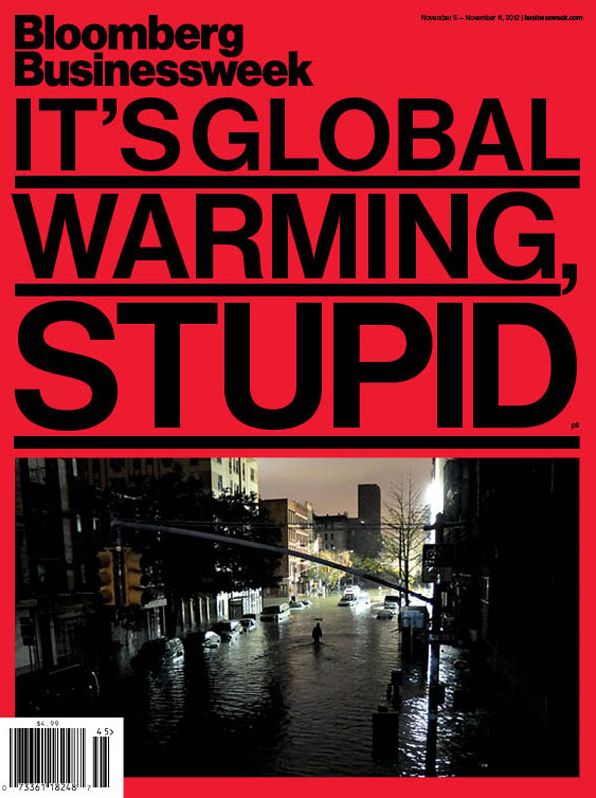
Posted in Biodiversity, Energy, Global Warming, Irish Focus, Sustainability | Tagged , , , | 9 Comments

An interview with Irishenvironment.com

Robert (Bob) Hernan is the man behind Irishenvironment.com, an online resource for all things in the environment and ecology field on the island of Ireland. Bob was formerly Assistant Attorney General in the Environmental Protection Bureau, and his professional scalps include successfully litigating over $100 million in damages against a single corporate polluter. He is, you might say, one tough cookie.

Ireland’s answer to Erin Brockovich divides his time between the contrasting settings of rural Donegal and downtown Manhattan. He is also author of ‘This Borrowed Earth: Lessons from the 15 Worst Environmental Disasters Around the World’.

Bob has conducted Laoghaire recently to record an interview about climate change and wider environmental topics (including communications) and how they are playing out in Ireland (see interview below).

He gave a particular focus to some fairly trenchant criticisms on my part about the failure of the media, both print and broadcast, to fulfil what I believe is their key duty to inform and prepare the public for a world dominated by climate disruption, chaotic weather events and deepening energy and economic crises.

That’s a lot of ground to cover, and since the total edited clip only runs to a little over 13 minutes, there isn’t scope to have gone in too deep on any of them. On the upside, since brevity is the soul of wit, best be brief…

Posted in Global Warming, Irish Focus, Media | 2 Comments

To save lives, we must first abandon hope

Below, my article, as it appears in the latest edition of ‘Village’ magazine:

Is it a biscuit? Or is it a bar? Does the convergence of a range of environmental, energy and resource crises compound a problem – or a predicament? The question is neither trite nor trivial.

For the last several decades, environmentalists and scientists alike have attempted to frame our ever-intensifying ecological crises in terms of problems that, with a combination of better technology and increased efficiency, could be managed successfully. Hence the oxymoronic ‘green growth’ and ‘sustainable development’.

Self-help books along the lines of ’50 ways to save the planet’ sell alongside volumes on everything from homeopathy and astrology. As long as we define our existential crux in terms of a series of problems that can be managed, this is a perfectly rational approach.

In a crisis, being able to distinguish between a problem and a predicament can mean the difference between life and death. In simple terms, problems have solutions, predicaments have outcomes.

“When faced with a predicament, seeking a solution isn’t just a useless thing to do; it is the wrong thing to do”, argues Chris Martenson, author of ‘The Crash Course’. Critical time and resources “should be devoted to managing the outcome, not trying to do the impossible by failing to appreciate the nature of our collective predicament, we place ourselves at greater risk, because the longer we dither, less time and fewer options remain”.

The recent sinking of the Costa Concordia is a case in point. The failure of the captain and senior crew to recognise their predicament (i.e. this ship has a giant hole in it) led to fatal delays in evacuating the vessel. Time that might have been spent getting people to safety was instead frittered away in fruitless discussions between the ship’s crew and its owners. Given the botched evacuation, had this disaster happened further from the shore, the death toll could have run into thousands.

All of which brings us to where we now find ourselves. Unsurprisingly, the world has arrived at precisely the position projected by scientists as far back as the late 1950s, but subsequently established beyond any reasonable doubt: Earth is being rapidly forced into a new, hotter, state.

A massive energy imbalance has been accumulating for decades, like a giant rubber band being stretched ever further. System inertia means that, in the shorter terms, these effects are dampened. At a certain point, however, the system either snaps entirely or recoils with a wallop. When that precise moment will occur is impossible to predict; that it will occur is a mathematical certainty.

What that will mean for those of us living in the era of environmental consequences is difficult to predict accurately; we do know it will be deeply unpleasant and quite irreversible. The fuse that is lit and is now fizzing towards the keg is atmospheric CO2. When instrumental measurement of global atmospheric carbon dioxide began back in 1958, CO2 levels stood at 315 parts per million (ppm). By 2011, levels had climbed to 392ppm – that’s an astonishing 25 per cent rise in a little over 50 years. In Earth’s history, only rare events on the scale of meteor impact have so profoundly altered the composition of the atmosphere in such a short timescale.

These CO2 levels are now higher than at any time in at least the last three million years, and the needle is climbing fast.

On the other hand, the freight train that is industrial civilisation needs to run at ever-increasing speeds, burning ever more resources and spewing out ever more pollution – simply to stave off economic collapse. That’s the predicament. All the wishful green thinking and lightbulb-changing in the world counts for naught when set against these realities.

This April marks the centenary of another famous sinking, that of RMS ‘Titanic’ in 1912. It remains a potent metaphor for hubris and nemesis, and an apposite reminder of the hazards of melting ice.

In that disaster, to save lives, passengers and crew alike had first accept the painful fact of their predicament, and then abandon ship. To save lives, we must first abandon hope, for hope is the mortal enemy of resolve, holding out the chimera of easy fixes to our fathomless predicament.

The battle to ‘save the environment’ has ended. The long campaign to save our own skins has now begun in earnest.

John Gibbons is a specialist environmental writer and commentator and is online at Thinkorswim.ie. Twitter: @think_or_swim

Posted in Biodiversity, Global Warming | Tagged | 5 Comments

A warning from history

It’s almost 20 years since the Earth Summit in Rio in 1992. This led to the ‘Rio Declaration’ and its 27 Principles, signed up to by the nations of the world amid much pomp and posturing. Later that year, a group comprising 1,700 of the world’s leading scientists, including the bulk of Nobel laureates in the physical sciences, issued an appeal, boldly headlined: Warning To Humanity.

Re-reading this warning letter almost 20 years later, and what exactly has changed? Nothing. And everything. Work through the list below and you will struggle to find any measure (with the possible exception of ozone) which hasn’t sharply deteriorated in the 20 years since this document was first issued. “No more than one or a few decades remain before the chance to avert the threats we now confront will be lost and the prospects for humanity immeasurably diminished”, went the statement.

Two decades have already passed, and how have we responded? First, by adding another 1.6 billion humans to the 5.4 billion the Earth had to carry in 1992. Next, instead of throttling back economic activity to reduce the rate of environmental impact, we have ratcheted up global economic output, as well as greenhouse gas and other toxic emissions to the highest levels in all of human history. ” No nation can escape from injury when global biological systems are damaged. No nation can escape from conflicts over increasingly scarce resources…The greatest peril is to become trapped in spirals of environmental decline, poverty, and unrest, leading to social, economic and environmental collapse”, the document warned.

That was then. The world’s most eminent experts served it up straight. We, the people, and our politicians, pundits and economist classes preferred instead to ‘double-down’ on betting that the short term benefits of economic growth were worth trading off the future safety, well-being, prosperity and perhaps, continued existence of humanity.

So, was it worth it? Posterity will make the final call on that, but the omens thus far are not encouraging. Meanwhile, fasten your seat belts, engage your reality-distortion field and prepare to travel back to a time when the future was, well, still ahead of us and making the right choices still seemed possible, even inevitable.

———————————————————-

HUMAN BEINGS and the natural world are on a collision course. Human activities inflict harsh and often irreversible damage on the environment and on critical resources. If not checked, many of our current practices put at serious risk the future that we wish for human society and the plant and animal kingdoms, and may so alter the living world that it will be unable to sustain life in the manner that we know. Fundamental changes are urgent if we are to avoid the collision our present course will bring about.

The Environment

The environment is suffering critical stress:

The Atmosphere
Stratospheric ozone depletion threatens us with enhanced ultraviolet radiation at the earth’s surface, which can be damaging or lethal to many life forms. Air pollution near ground level, and acid precipitation, are already causing widespread injury to humans, forests and crops.
Water Resources
Heedless exploitation of depletable ground water supplies endangers food production and other essential human systems. Heavy demands on the world’s surface waters have resulted in serious shortages in some 80 countries, containing 40% of the world’s population. Pollution of rivers, lakes and ground water further limits the supply.
Oceans
Destructive pressure on the oceans is severe, particularly in the coastal regions which produce most of the world’s food fish. The total marine catch is now at or above the estimated maximum sustainable yield. Some fisheries have already shown signs of collapse. Rivers carrying heavy burdens of eroded soil into the seas also carry industrial, municipal, agricultural, and livestock waste — some of it toxic.
Soil
Loss of soil productivity, which is causing extensive Land abandonment, is a widespread byproduct of current practices in agriculture and animal husbandry. Since 1945, 11% of the earth’s vegetated surface has been degraded — an area larger than India and China combined — and per capita food production in many parts of the world is decreasing.
Forests
Tropical rain forests, as well as tropical and temperate dry forests, are being destroyed rapidly. At present rates, some critical forest types will be gone in a few years and most of the tropical rain forest will be gone before the end of the next century. With them will go large numbers of plant and animal species.
Living Species
The irreversible loss of species, which by 2100 may reach one third of all species now living, is especially serious. We are losing the potential they hold for providing medicinal and other benefits, and the contribution that genetic diversity of life forms gives to the robustness of the world’s biological systems and to the astonishing beauty of the earth itself.

Much of this damage is irreversible on a scale of centuries or permanent. Other processes appear to pose additional threats. Increasing levels of gases in the atmosphere from human activities, including carbon dioxide released from fossil fuel burning and from deforestation, may alter climate on a global scale. Predictions of global warming are still uncertain — with projected effects ranging from tolerable to very severe — but the potential risks are very great.

Our massive tampering with the world’s interdependent web of life — coupled with the environmental damage inflicted by deforestation, species loss, and climate change — could trigger widespread adverse effects, including unpredictable collapses of critical biological systems whose interactions and dynamics we only imperfectly understand.

Uncertainty over the extent of these effects cannot excuse complacency or delay in facing the threat.

Population

The earth is finite. Its ability to absorb wastes and destructive effluent is finite. Its ability to provide food and energy is finite. Its ability to provide for growing numbers of people is finite. And we are fast approaching many of the earth’s limits. Current economic practices which damage the environment, in both developed and underdeveloped nations, cannot be continued without the risk that vital global systems will be damaged beyond repair.

Pressures resulting from unrestrained population growth put demands on the natural world that can overwhelm any efforts to achieve a sustainable future. If we are to halt the destruction of our environment, we must accept limits to that growth. A World Bank estimate indicates that world population will not stabilize at less than 12.4 billion, while the United Nations concludes that the eventual total could reach 14 billion, a near tripling of today’s 5.4 billion. But, even at this moment, one person in five lives in absolute poverty without enough to eat, and one in ten suffers serious malnutrition.

No more than one or a few decades remain before the chance to avert the threats we now confront will be lost and the prospects for humanity immeasurably diminished.

WARNING

We the undersigned, senior members of the world’s scientific community, hereby warn all humanity of what lies ahead. A great change in our stewardship of the earth and the life on it, is required, if vast human misery is to be avoided and our global home on this planet is not to be irretrievably mutilated.

What We Must Do

Five inextricably linked areas must be addressed simultaneously:

  1. We must bring environmentally damaging activities under control to restore and protect the integrity of the earth’s systems we depend on. We must, for example, move away from fossil fuels to more benign, inexhaustible energy sources to cut greenhouse gas emissions and the pollution of our air and water. Priority must be given to the development of energy sources matched to third world needs — small scale and relatively easy to implement. We must halt deforestation, injury to and loss of agricultural land, and the loss of terrestrial and marine plant and animal species.
  2. We must manage resources crucial to human welfare more effectively. We must give high priority to efficient use of energy, water, and other materials, including expansion of conservation and recycling.
  3. We must stabilize population. This will be possible only if all nations recognize that it requires improved social and economic conditions, and the adoption of effective, voluntary family planning.
  4. We must reduce and eventually eliminate poverty.
  5. We must ensure sexual equality, and guarantee women control over their own reproductive decisions.

The developed nations are the largest polluters in the world today. They must greatly reduce their over-consumption, if we are to reduce pressures on resources and the global environment. The developed nations have the obligation to provide aid and support to developing nations, because only the developed nations have the financial resources and the technical skills for these tasks.

Acting on this recognition is not altruism, but enlightened self-interest: whether industrialized or not, we all have but one lifeboat. No nation can escape from injury when global biological systems are damaged. No nation can escape from conflicts over increasingly scarce resources. In addition, environmental and economic instabilities will cause mass migrations with incalculable consequences for developed and undeveloped nations alike.

Developing nations must realize that environmental damage is one of the gravest threats they face, and that attempts to blunt it will be overwhelmed if their populations go unchecked. The greatest peril is to become trapped in spirals of environmental decline, poverty, and unrest, leading to social, economic and environmental collapse.

Success in this global endeavor will require a great reduction in violence and war. Resources now devoted to the preparation and conduct of war — amounting to over $1 trillion annually — will be badly needed in the new tasks and should be diverted to the new challenges.

A new ethic is required — a new attitude towards discharging our responsibility for caring for ourselves and for the earth. We must recognize the earth’s limited capacity to provide for us. We must recognize its fragility. We must no longer allow it to be ravaged. This ethic must motivate a great movement, convince reluctant leaders and reluctant governments and reluctant peoples themselves to effect the needed changes.

The scientists issuing this warning hope that our message will reach and affect people everywhere. We need the help of many.

We require the help of the world community of scientists — natural, social, economic, political; we require the help of the world’s business and industrial leaders; we require the help of the worlds religious leaders; and we require the help of the world’s peoples. We call on all to join us in this task.

Posted in Biodiversity, Global Warming, Sustainability | Leave a comment

Shadow of a doubt: how they fooled us about a killer habit

Below, my article, as it appears in today’s Irish Times. It’s as much about the ‘Tobacco Strategy’ as smoking. There are lessons that may be useful in facing down the climate deniers. At the very least, it’s good to know their playbook…

———————————————————–

Fifty years ago this week the UK Royal College of Physicians published its landmark report entitled ‘Smoking and Health’. It stated conclusively the cigarette smoking was a leading cause of lung cancer and bronchitis, as well as contributing to heart disease. Public reaction to this bombshell was muted. Some 70 per cent of men were smokers at the time, and the habit was widely socially acceptable.

Few wanted to hear that an enjoyable habit could also be so dangerous. Coming to accept the uncomfortable new facts about smoking would mean for individuals, having to decide if it was really worth the risk. At a societal level, a product that was killing as many as one in two of its customers would at the very least have to be subject to strict regulation.

Then again, in 1962, your family doctor quite probably smoked in the surgery, while his female patients may have continued smoking throughout their pregnancies. That’s how widely accepted and poorly understood the consequences of tobacco consumption were just half a century ago.

The toll, for such a seemingly minor vice, has been astonishing. In the 20th century, around 100 million people died prematurely as a direct result of smoking, with millions more suffering non-fatal illnesses. That’s more than the total number killed in both world wars. The World Health Organisation describes tobacco use as “the leading cause of preventable death in the world”. It is a risk factor in six of the eight leading causes of death globally.

In Ireland, smoking kills up to 7,000 people annually, that’s 35 times more than our total road fatalities. Despite the risks, at least one in four Irish adults still chooses to smoke. Tobacco is also a class issue in Ireland; prevalence among lower socio-economic groups is almost double that of professionals. Some 56 per cent of poorer women under 30 are now smokers.

Medical evidence linking smoking to lung cancer first came to light in Germany in the 1930s. Ironically, the world’s first anti-smoking campaign was run by the Nazi government, while Hitler forbade all smoking in his presence. The tarnished reputation of German scientists meant that little wider notice was taken of these findings.

Then, two decades later, US researchers established a direct link between smoking and cancers in 1953. This breakthrough study provoked a firestorm of media coverage. The tobacco industry was plunged into crisis. Marketing a popular, lucrative product that was suddenly found to be inadvertently causing the deaths of millions of your customers is a nightmare scenario for any business.

The rapid accumulation of hundreds more scientific studies throughout the 1950s confirming the dangers inherent in tobacco products left the industry with a clear choice: either accept the science and agree to more regulation and taxes – or wage war on the science itself. Fatefully, they chose to fight.

In what decades later was described by the federal courts as one of the largest conspiracies to commit fraud ever perpetrated in the US, tobacco industry chiefs called in their PR experts and together they devised a plan to undermine the scientific evidence, befuddle the media and lead the public to mistakenly believe that the “science wasn’t settled”. To succeed, they had to create the impression that many scientists disagreed that cigarette smoking was in fact dangerous.

The blueprint for this widescale deception became known as the ‘Tobacco Strategy’. It was brilliantly successful in delaying regulation of tobacco products because it was at heart simple. The PR strategists recognised that the public has a poor understanding about how scientific or medical understanding is developed and advanced, and crucially, so does the lay media.

“Doubt is our product”, wrote an industry memo from 1969, “since it is the best means of competing with the ‘body of facts’ that exists in the public mind”. If tobacco causes lung cancer, why are some smokers unaffected? Why do more men than women get cancer? Why are lung cancer levels higher in some cities than others if it’s really tobacco to blame?

The genius of this tactic is that even though the industry knew there were legitimate explanations for all these anomalies, simply ‘asking the questions’ inferred that these were real scientific controversies. The media was drawn into this bogus debate and began to frame its function as ‘refereeing’ between scientists and industry spokesmen in the newly minted “controversy” about whether or not tobacco causes cancer. The New York Times until 1979 had a formal editorial policy of including tobacco industry comment in every article on tobacco and health.

The tobacco industry also channelled enormous sums of money into biomedical research in an attempt to develop explanations – other than tobacco – for a range of medical conditions. This also allowed the industry to directly fund hundreds of researchers, many of whom would later testify as pro-industry expert witnesses in legal actions.

In the book, ‘Merchants of Doubt’, science historian Prof Naomi Oreskes uncovers how a handful of once-reputable scientists, bankrolled by industry funding and channelled through libertarian ‘think tanks’ and phoney grassroots (astroturf) movements have applied the ‘Tobacco Strategy’ blueprint repeatedly to argue against health and environmental regulations on issues from mercury to acid rain, ozone depletion and, most ominously, global warming.

Conservative Yale economist William Nordhaus recently pointed out that while tobacco sales in the US today are under $100 billion, its energy sector is a trillion dollar business. Since addressing global warming would hit fossil-based businesses, he warned of the need for “extreme vigilance to prevent pollution of the scientific process by the merchants of doubt”.

Evidence of this contamination emerged with the recent leaking of internal documents from the Heartland Institute, a libertarian group that has long fought regulations on second-hand tobacco smoke on the false grounds that it is not harmful. The same group is now, with energy industry funding, seeking to corrupt the teaching of basic science to US schoolchildren as part of its larger war on climate science.

The president of the American Association for the Advancement of Science (AAAS) said recently she was “scared to death” by the success anti-science zealots. “We are sliding back into a dark era”, was Nina Fedoroff’s worrying conclusion. The lessons of the ‘Tobacco Strategy’ brings to mind the old proverb: fool me once, shame on you. Fool me twice, shame on me.

John Gibbons is an environmental writer and commentator, and tweets @think_or_swim and is online at Thinkorswim.ie.

Posted in Global Warming, Media, Sceptics | 14 Comments

When science and special interests collide

Below, my column, as it appears on TheJournal.ie...

Do you reckon GPS is a hoax? How about x-rays? Or satellite communications. Or perhaps the Internet, smartphones or germ theory. Or how about evolution? What these seemingly unrelated themes have in common is that they are just some of the rich fruits of a century and more of astonishing advances in real scientific understanding.

Humanity has achieved more progress, in everything from healthcare and life expectancy to transport and communications, since the mid-19th century than in all of previous recorded history. The reason for this bloom of extraordinary breakthroughs has been the primacy of what’s known as the scientific method.

Until the last century or so, much of what passed for knowledge was in reality little more than old wives’ tales. Dodgy dogma, whether promoted by Popes or princes was, until well into the modern age, more highly valued than knowledge acquired through the meticulous, evidence-based method of measurement, experimentation and systematic enquiry.

What makes the scientific method so uniquely effective in advancing knowledge is its dogged pursuit of provable truths and the ruthlessness with which ideas without evidence are cast aside. Rigorous science is the reason why jet aircraft rarely fall from the sky, and for that matter, why someone can click a button on a computer anywhere in the world and instantly access this article. This isn’t magic, it’s science.

Scientific truths frequently collide with vested interests. In the 17th century, Galileo Galilei famously fell foul of the Roman Catholic Inquisition for his heresy in observing that the Earth was not, after all, the centre point of the universe.

Science once again clashed with powerful interests in the 1960s, following the discovery of strong links between cigarette smoking and lung cancer. This triggered a pitched battle between medical science and the tobacco industry.

Adopting what became known as the ‘Tobacco Strategy’, the industry spent millions spreading doubt and disinformation in a bid to discredit medical science and befuddle the public about the risks of smoking. A favourite tactic was recruiting ‘reliable’ researchers to carry out pseudo-science with the sole aim of at creating a phoney ‘debate’ about cigarette safety. The tactic was enormously effective, and it delayed regulation of tobacco products by decades.

During this time, millions died of smoking-related illnesses, unwitting victims of this industry triumph in undermining the medical evidence. “Doubt is our product,” a tobacco executive cheerfully remarked at the time.

While the tobacco wars have largely ended, a far greater conflict between scientific evidence and powerful corporate interests has erupted. The new battleground is carbon dioxide (CO2), the chief by-product of the burning of fossil fuels.

A massive international scientific effort has focused in recent decades on establishing why the Earth is warming at an unprecedented rate. The findings are unambiguous: the heating is driven by the ‘greenhouse effect’ as tens of billions of tonnes of CO2 from human activities accumulate every year in the atmosphere.

The science is extremely robust. For instance, NASA calculated that around two thousand billion tonnes of ice has melted in Greenland and Antarctica in the last five years. That’s the staggering rate of 45 million tonnes of ice melting every hour, during that period.

The message from science is clear: humanity needs to drastically and permanently reduce the amount of CO2 we emit, or face a climate Armageddon this century. These basic facts are perceived as a real threat by the trillion-dollar fossil fuel industries.

Like the tobacco companies before them, Big Energy is now fighting tooth and nail to convince the public not to trust the hard evidence, and to instead place our faith and our future in the word of paid liars and PR shills.

Big Energy is once more resorting to the favourite route of promoting junk science and phoney controversy, while attacking the integrity of real scientists. Industry-funded neoliberal lobby groups like the Heartland Institute do the dirty work of muddying the water, conning the media and convincing the public that the looming climate catastrophe is just some left-wing alarmism.

The Heartland Institute recently suffered a highly embarrassing leak of internal documents (a disgruntled climate scientist tricked them into emailing him the information). The documents reveal the eye-watering cynicism of these lobby groups and their absolute contempt for science. Apart from funding systematic attacks on science, the Institute is also investing heavily in campaigns to get bogus climate science taught on the public school curriculum in the US.

Nina Fedoroff, president of the American Association for the Advancement of Science (AAAS) said last week she was “scared to death” by the success of the anti-science zealots. “We are sliding back into a dark era,” she warned.

Junk climate science attracts a faithful following from people who feel threatened by the message that there are real, immovable limits in the path of irresistible economic growth. Climate deniers come in many guises. RTE’s Pat Kenny for instance is Ireland’s best-known advocate of bogus science, offering a friendly ear to crackpot theorists and routinely attacking mainstream science as though it were some vast green conspiracy. “We are all born mad”, wrote Samuel Beckett, “some remain so”.

Posted in Global Warming, Media, Sceptics | Tagged , , | 3 Comments